The Public Bench Myth: More Seating Does Not Automatically Make a Place Welcoming
Public bench placement matters as much as bench count. Learn how orientation, paths, shade and nearby activity shape whether seating feels usable.
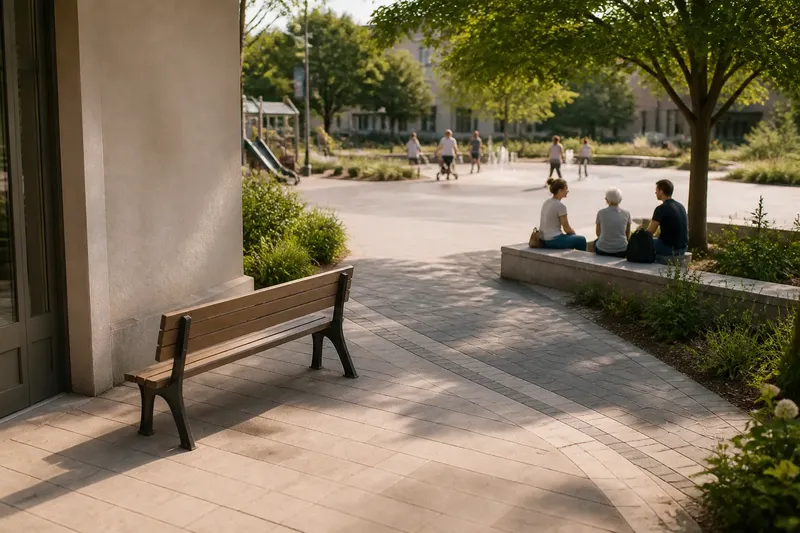
A bench sits beside the library entrance, but its back faces the door and its seat points at a blank wall. Across the plaza, a low ledge near a tree is occupied. Public bench placement can explain that difference better than a seating inventory can.
Counting benches is useful for maintenance and capacity, but it says little about whether people can comfortably reach, use or share them. A welcoming seat is part of a small arrangement: its position, direction, surroundings and relationship to movement all matter.
Why doesn’t more seating automatically make a place welcoming?
More seats increase the number of places where someone could sit, but they do not necessarily make those places appealing or usable. A seat may be hard to reach, exposed to wind, isolated from activity or aimed at something people would rather not face.
Even a well-made bench can feel like an instruction to stop in the wrong place. A person carrying groceries may want a brief pause near a path; someone meeting a friend may prefer a place where conversation is easy. A single count treats these different needs as interchangeable.
Consider an invented situation: a neighborhood adds several benches along the edge of a paved square, all facing the same direction. The expected observable result might be more people able to sit, but if the seats are far from shade and offer no view of the square’s activity, they may remain less appealing than a nearby broad step.
The practical question is not only “How many seats are here?” It is “What can a person do comfortably from each seat?”
Where should public benches be placed?
Place seating where a pause makes sense, with a clear approach and enough room to sit without obstructing the ordinary use of the space. Commonly useful locations include the edge of a park path, near a playground where caregivers can watch, or beside a public building where people may wait.
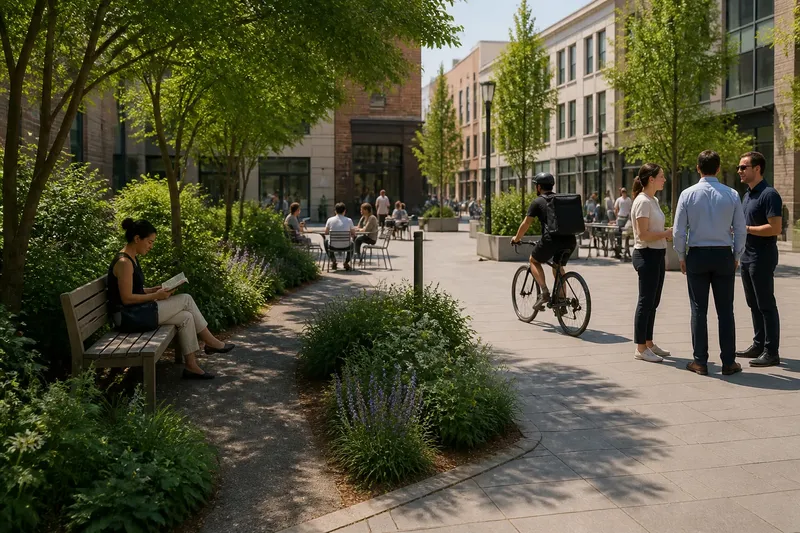
Edges often work well because they let someone sit near activity without occupying its center. A bench beside a path can offer a view of passersby while leaving the route open. Its exact position still matters: a narrow pinch point can turn a considerate pause into an obstacle.
Nearby features should support the reason for sitting. A seat near a fountain might suit someone watching a busy public space, while one beside a garden could make a quieter pause more inviting. A seat placed near a trash can may be convenient for maintenance but less pleasant if it is too close.
Look for a stable surface, a route that does not require stepping through planting, and a place where a seated person is not immediately in the way. If a site has several distinct activities, distribute seats in relation to them rather than lining every bench along one convenient boundary.
Which way should a bench face?
A bench should face the view or activity its likely users want, while avoiding a position that makes sitting feel exposed or awkward. It may look toward a garden, a play area, a plaza, or the movement along a path; there is no single correct direction for every setting.
Orientation also shapes social use. Seats facing one another can support conversation, while benches beside a path let people watch activity without having to join it. A row of seats all facing a blank wall may suit no clear purpose, though a quiet, sheltered view can be exactly what some people prefer.
Notice where a seated person would look, and what would be behind them. Some users value a view of an entrance or a visible public area; others may feel more comfortable with a wall, planting bed or other solid edge behind the seat. A bench that faces directly into bright glare may be less inviting during parts of the day.
Before fixing the direction, stand or sit at the proposed location and consider the view from ordinary eye level. This simple check often reveals what a plan drawing leaves abstract.
How should benches relate to paths and other features?
Seating should be close enough to paths and useful features to feel connected, but placed far enough aside that people can pass without squeezing around seated visitors. The best position is often just off the main line of movement, with a clear approach from the path.
Keep the route between a bench and its surroundings legible. A person using a cane, pushing a stroller or carrying a bag should not need to cross a muddy verge or weave around a signpost to reach it. In a busy park, the bench should not become an informal waiting queue that blocks the path.
Consider what the seat is adjacent to and what that relationship implies. A bench near a bus stop may help someone wait, but it should not obstruct boarding or the movement of people getting off. Near a play space, it can give caregivers a useful view without placing them in the children’s active area.
Distance is only part of access. A seat can be technically nearby yet feel disconnected if a planter, curb or change in surface makes the approach difficult. Keep the route straightforward and consider whether the surrounding space offers room to approach, sit down and leave without disturbing others.
What makes a bench comfortable to use?
Comfort depends on more than the seat itself. Shade, wind exposure, sun direction, surface condition, nearby noise and the amount of room around the bench can all affect whether someone wants to stay.
A tree can offer welcome shade, but its roots may lift paving or make the approach uneven. A canopy may shelter a seat from sun while leaving it exposed to wind. These are site-specific tradeoffs, not reasons to choose one feature automatically.
Materials also shape everyday experience. Wood can feel different from metal in direct sun or cold weather, while rough edges, damaged boards or water that collects on the seat can make a bench unpleasant. The appropriate material and maintenance approach depend on local conditions and the manufacturer’s instructions.
Room for different ways of sitting matters too. Some visitors prefer a backrest; others may need armrests to sit down and rise more easily. A mix of seating types can serve more people than a row of identical benches, provided the arrangement still leaves clear space for mobility devices and companions.
How can a site manager judge seating without relying on a count?
Observe how the seating works in ordinary conditions, then record the details that explain use or disuse. A simple walk-through can check whether seats are visible, reachable, oriented toward something useful and positioned clear of the main route.
It helps to look at the place at different times and under different conditions. A sunny seat may be comfortable in cool weather and harsh in summer; a quiet corner may feel peaceful in daylight but isolated after nearby activities close. Avoid drawing a broad conclusion from one brief visit.
- Can a visitor see the bench from the path or entrance?
- Is there a clear, firm approach to the seat?
- Can people pass without brushing against seated visitors?
- Does the bench face a useful view, activity or companion?
- Is shade, shelter or exposure appropriate for the setting?
- Does the surrounding area leave space for different users to sit and move?
- Is the bench clean, intact and positioned away from unpleasant or disruptive features?
Record the answer and the decision it suggests. A bench hidden behind a sign may need a clearer position; a bench with a blocked approach may call for changes to the nearby layout rather than another seat. For installation, accessibility and site-specific requirements, follow applicable local rules and consult a qualified professional where needed.
What questions do people often ask about public bench placement?
Should benches face a path or face away from it?
Either can work, depending on whether the aim is to watch activity, talk with another visitor or enjoy a quieter view. Keep the seat out of the path’s clear movement area and consider whether the view feels comfortable rather than exposing.
How far should a bench be from a path?
There is no universal distance that suits every path and site. Position it close enough to be easy to reach, with enough clear space for people to pass and for someone to approach the seat without squeezing through.
Are benches better in shade?
Shade can make a seat more comfortable during hot, sunny conditions, but a shaded location may be cold, damp or windy at other times. A range of conditions across a public space can serve different preferences better than putting every seat in one type of exposure.
Why do people sit on steps or ledges instead of benches?
Steps and ledges may offer a convenient place near activity, a preferred view or room to sit with a group. Their popularity can suggest that nearby formal seating is poorly placed, but it does not mean every ledge is a suitable or accessible substitute.
What should matter more than the bench count?
Count seats to understand capacity, then judge each location by how it supports a real pause. Public bench placement is useful when the seat connects comfortably to a path, gives a person a reason to face its surroundings and leaves room for others to move.
When reviewing a public space, note one seat that people use and one that they pass by. Compare their approach, view, exposure and relation to nearby activity; the contrast may point to a practical change without adding another bench to the tally.